
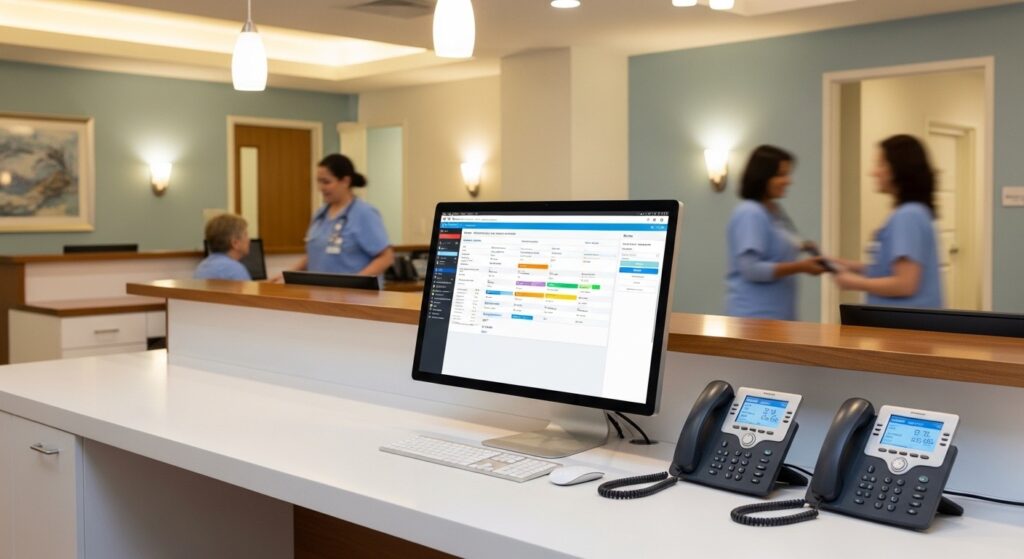
VoIP for Medical Offices: What to Know About Phone Systems
Medical practices using VoIP phone systems see up to 50% cost savings while ensuring HIPAA compliance and improving patient communication.
- HIPAA-compliant VoIP systems protect patient data through encryption and secure call handling.
- Advanced features like appointment reminders and call routing reduce administrative burdens and improve workflow efficiency.
- Cloud-based systems offer scalability, mobile access, and integration with existing medical software.
Modern medical offices require secure, flexible communication systems that support both in-office and remote care delivery.
Medical offices face communication challenges that directly impact patient care and operational efficiency. From managing high call volumes and coordinating multi-location staff to ensuring HIPAA compliance and supporting telehealth services, healthcare providers need robust communication solutions that traditional phone systems can’t deliver.
The healthcare industry has shifted toward digital communication technologies, driven by changing patient expectations and regulatory requirements. Patients expect multiple communication options, including text messaging, video consultations, and mobile-friendly appointment scheduling, while healthcare providers must maintain strict security protocols to protect sensitive patient information.
VoIP for medical offices addresses these complex communication needs through internet-based phone systems specifically designed for healthcare environments. Unlike traditional phone lines that rely on outdated infrastructure, these advanced communication platforms integrate with medical software, provide HIPAA-compliant security features, and offer the flexibility required for modern healthcare delivery.
What is VoIP for Medical Offices?
VoIP for medical offices encompasses internet-based communication systems specifically designed for healthcare environments. Unlike standard business phone systems, healthcare VoIP solutions incorporate specialized security measures and features that address the unique needs of medical practices.
These systems transmit voice calls, messages, and data over secure internet connections rather than conventional copper phone lines. Medical practices benefit from unified communication platforms that combine voice, video, messaging, and fax services into a single, manageable system that supports everything from basic appointment scheduling calls to complex telehealth consultations.
The technology differs from consumer VoIP services through robust security protocols, integration capabilities with medical software, and compliance features required for handling protected health information, making it an essential component for modern healthcare delivery.
Why Medical Offices Need HIPAA-Compliant Phone Systems
Healthcare organizations face stringent requirements under the Health Insurance Portability and Accountability Act when handling patient communications. Traditional phone systems lack the security features necessary for healthcare environments, transmitting calls without encryption and leaving patient conversations vulnerable to interception.
HIPAA-compliant phone systems secure Protected Health Information during transmission and storage, preventing costly violations. Healthcare data breaches increased to 725 incidents, highlighting ongoing security challenges facing medical organizations. Violation penalties range from $141 to $71,162 for infractions, with a $2,134,831 annual cap for the most serious breaches.
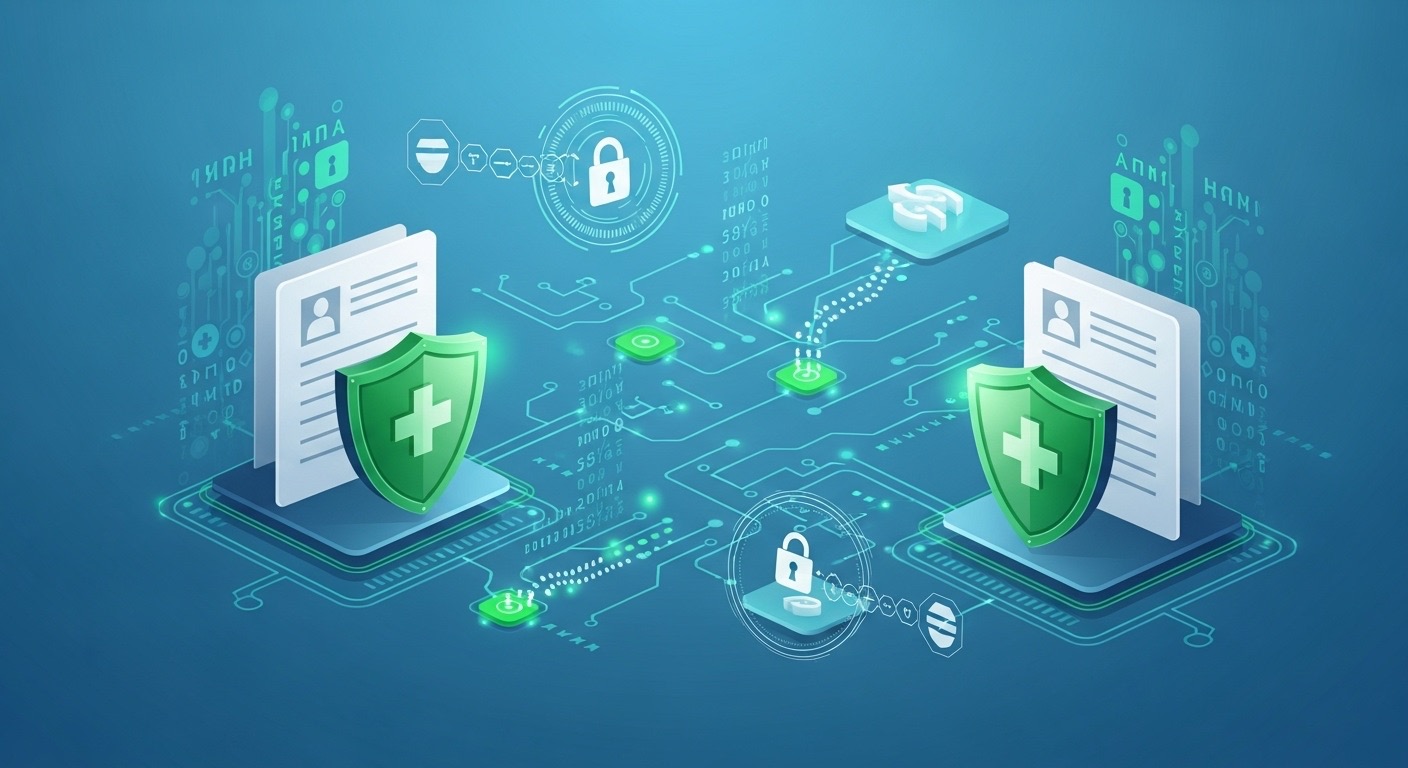
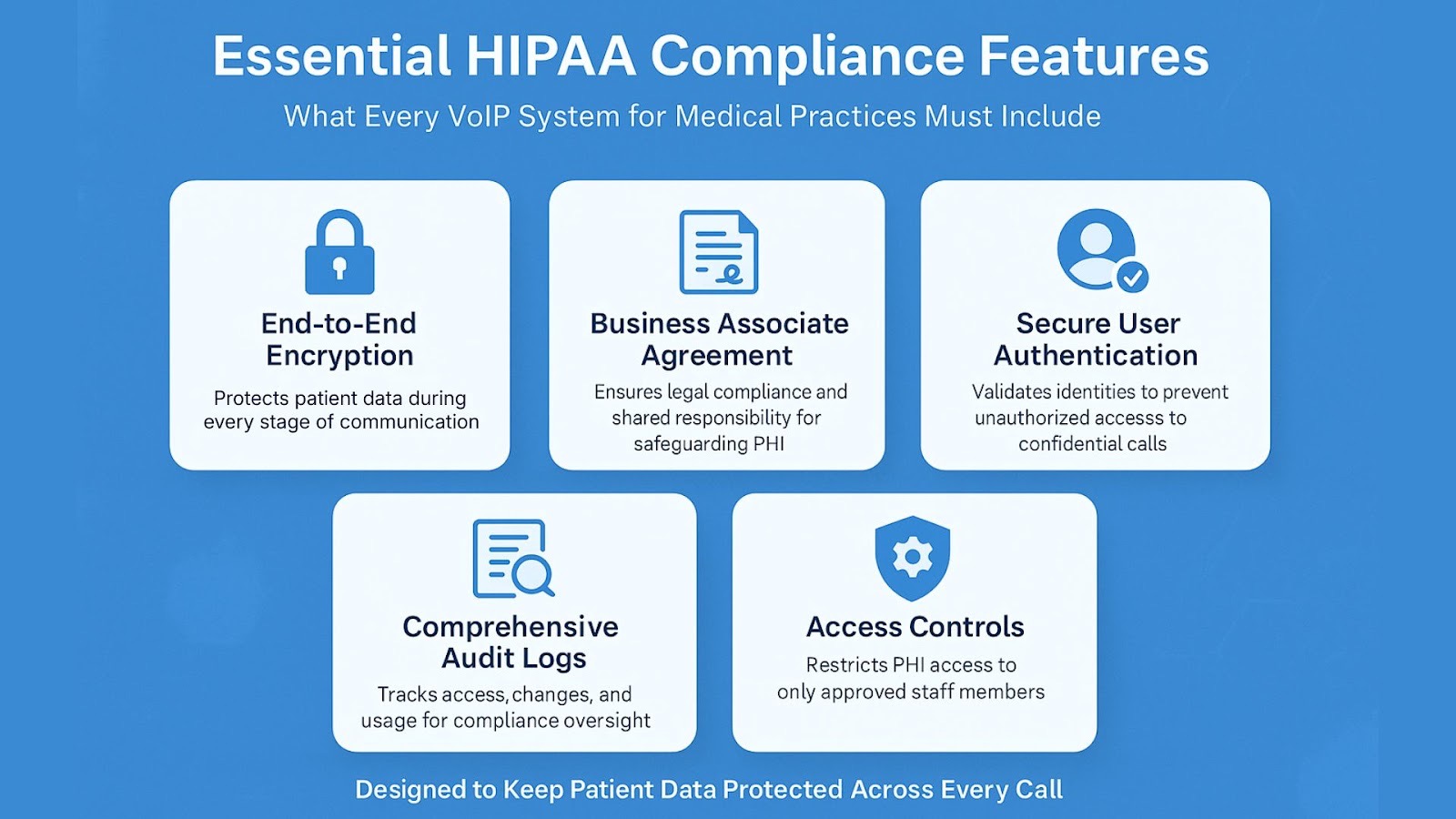
Healthcare VoIP systems address vulnerabilities through end-to-end encryption, secure user authentication, and comprehensive audit logs that track all communication activities. Business Associate Agreements represent a critical compliance component, ensuring that phone service providers understand their obligations to protect patient data and implement appropriate security measures.
Essential Features for Healthcare VoIP Systems
Modern medical offices require specific communication capabilities that address their unique operational needs and patient care responsibilities.
Intelligent Call Routing and Auto-Attendant
Patient calls require different handling based on their urgency and nature. Advanced call routing directs appointments to scheduling staff, billing inquiries to financial teams, and urgent medical concerns to clinical personnel. Auto-attendants handle routine inquiries, reducing wait times and ensuring patients reach the appropriate department quickly.
Mobile Integration and On-Call Support
Healthcare providers need constant connectivity for emergency situations and patient follow-ups. Mobile apps allow doctors and nurses to receive calls on their personal devices while displaying the practice’s main number as caller ID, maintaining a professional appearance while providing flexibility for remote care delivery.
Secure Call Recording and Documentation
Medical practices often need to document patient interactions for quality assurance, training purposes, and liability protection. Healthcare VoIP systems provide encrypted call recording with secure cloud storage that maintains HIPAA compliance and integrates with practice management systems for easy access when needed.
Appointment Management Integration
Automated appointment reminders reduce no-show rates by sending voice calls, text messages, or emails confirming upcoming appointments and allowing patients to confirm or reschedule directly through the system.
Telehealth Video Conferencing
Integrated video conferencing allows medical practices to conduct secure virtual consultations without requiring separate platforms or additional software installations, supporting the growing demand for remote healthcare services.
Key Benefits of VoIP for Medical Practices
Medical practices implementing VoIP systems experience transformative improvements across multiple areas that directly impact both patient care and practice efficiency. These benefits encompass enhanced communication capabilities, streamlined workflows, and advanced technology integrations that position healthcare providers for long-term success. The following advantages demonstrate why VoIP has become an essential investment for medical offices of all sizes.
Significant Cost Reduction and Predictable Budgeting
Healthcare VoIP systems can reduce communication costs by up to 50% compared to traditional phone services. Practices eliminate separate charges for long-distance calls, additional phone lines, and expensive hardware maintenance while gaining access to unlimited calling plans that provide predictable monthly communication expenses.
Enhanced Patient Communication Options
VoIP systems support multiple communication methods, including text messaging, email, and video calling, allowing patients to choose their preferred channel. This flexibility improves patient satisfaction and engagement with healthcare providers.
Improved Operational Efficiency
Automated features reduce administrative burdens on medical staff. Call routing ensures immediate connection to appropriate departments, appointment confirmations process automatically, and staff can focus more time on direct patient care rather than managing phone communications.
Scalability for Practice Growth
SIP trunk for clinics provides exceptional scalability that grows with expanding medical practices. Adding new phone lines, users, or locations requires no additional hardware installation, with practices able to adjust communication capacity instantly through online management portals.
Advanced Analytics and Software Integration
Detailed call analytics help medical practices understand communication patterns, identify peak calling times, and optimize staffing levels. Modern healthcare VoIP systems integrate seamlessly with Electronic Health Records, practice management software, and billing systems, enabling features like screen pops showing patient information when calls arrive and automated call logging in patient records.
Implementation Considerations for Medical Offices
Successfully implementing VoIP requires careful attention to technical and operational requirements that ensure optimal system performance and regulatory compliance.
Internet Infrastructure and Bandwidth Planning
VoIP systems depend entirely on internet connectivity for call quality and reliability. Each concurrent call typically requires 85 kbps of bandwidth for optimal audio quality. Medical practices need dedicated bandwidth that reserves sufficient capacity for voice communications separate from general internet usage, along with Quality of Service settings that prioritize voice traffic.
Security Protocols and Compliance Documentation
Healthcare VoIP implementations must include robust security measures beyond basic system features. Practices should establish protocols for regular security updates, user access management, and incident response procedures. Maintaining detailed documentation of security measures, user training, and system configurations supports HIPAA compliance audits and demonstrates due diligence in protecting patient information.
Staff Training and Change Management
Transitioning to new communication systems requires comprehensive staff training that covers both technical features and HIPAA compliance requirements. Medical staff need to understand proper procedures for handling patient information through the new system, including secure call handling, voicemail management, and mobile app usage.
Choosing the Right VoIP Provider for Medical Practices
Healthcare-specific features distinguish medical VoIP providers from general business communication services. Look for providers offering signed Business Associate Agreements, built-in HIPAA compliance features, and demonstrated experience serving medical practices. These specialized providers understand healthcare workflow requirements and regulatory obligations.
Technical support is vitally important when communication systems impact patient care. Evaluate providers based on their support response times, healthcare industry expertise, and availability during extended hours when medical emergencies may require system assistance.
Cost structure analysis should include all fees associated with setup, monthly service, additional features, and potential overage charges. Many providers offer healthcare-specific pricing plans that include features like secure messaging, video conferencing, and EHR integration as standard components rather than expensive add-ons.
Understanding how SIP technology enables these advanced features helps medical practices make informed decisions about their communication infrastructure investments while ensuring system reliability and redundancy measures that meet healthcare operation standards.
Frequently Asked Questions
What makes VoIP phone systems HIPAA-compliant for medical offices?
HIPAA-compliant phone systems include end-to-end encryption, secure user authentication, comprehensive audit logs, and Business Associate Agreements with providers. These features protect Protected Health Information during transmission and storage, meeting regulatory requirements for healthcare communications.
Can small medical practices afford VoIP phone systems?
Yes, VoIP systems typically reduce communication costs by up to 50% compared to traditional phone services. Small practices benefit from eliminated long-distance charges, reduced hardware costs, and scalable pricing that grows with practice needs without requiring large upfront investments.
How do VoIP systems integrate with existing medical software?
Modern healthcare VoIP systems offer direct integration with Electronic Health Records, practice management software, and scheduling platforms. These integrations enable features like automatic call logging, patient information screen pops, and synchronized contact databases for improved workflow efficiency.
What internet requirements do medical offices need for VoIP systems?
Medical practices need dedicated bandwidth, reserving approximately 85 kbps per concurrent call for optimal quality. Implementing Quality of Service settings that prioritize voice traffic and maintaining backup internet connections ensures reliable communication during peak usage periods.
Transform Your Medical Practice Communication
VoIP phone systems are the future of healthcare communication, offering medical offices the security, flexibility, and advanced features necessary for modern patient care delivery. From HIPAA-compliant call handling to seamless telehealth integration, these systems address complex communication needs while providing cost savings and operational improvements.
Enhanced patient communication, improved workflow efficiency, and scalable growth capabilities position medical practices for success. Get started with SIP.US today and discover how our HIPAA-compliant phone systems can transform your patient care delivery while protecting sensitive health information.

Mitch leads the Sales team at BCM One, overseeing revenue growth through cloud voice services across brands like SIPTRUNK, SIP.US, and Flowroute. With a focus on partner enablement and customer success, he helps businesses identify the right communication solutions within BCM One’s extensive portfolio. Mitch brings years of experience in channel sales and cloud-based telecom to every conversation.
Free SIP Trunk in 60 Seconds
Related Posts

SIP Trunking Providers: What’s the Difference?
Choosing among SIP trunking providers comes down to network ownership, contract terms, reliability guarantees, and…

SIP vs VoIP: What’s the Difference and Which is Right for Your Business?
The fastest way to choose between SIP and VoIP is to stop treating them as…

VoIP vs Traditional Phone Systems: A Guide for Businesses
A quick read for anyone weighing VoIP vs traditional phone systems for their company. If…